
Chester County’s economy, quite simply, is a paradigm of prosperity. The wide range of industries here is the driving force behind such affluence. However, for all of the different businesses that call this region home, few possess the sort of mass appeal that Victory Brewing Company has developed over the last two decades.
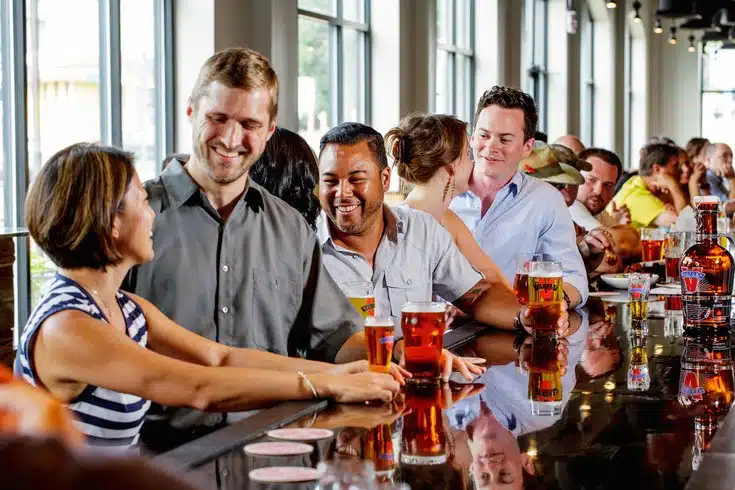
Whether beer, wine, or liquor is your drink of choice, finding someone who is unfamiliar with the Victory brand is like trying to catch a fish in an empty pond. The company is now celebrating its 20th anniversary, and the majority of the beer-drinking public will raise a glass and toast to that.
An in-depth look at Victory’s history reveals that its biggest challenge – one that would seem preposterous to craft-beer guzzlers the world over – was convincing wholesalers that a market existed for its product.
“The industry we’re in looked incredibly different 20 years ago,” said Bill Covaleski, who co-founded the company in 1996 with his childhood friend, Ron Barchet. “Back then, it was hard to get your beer on the shelf at a store or on tap at a restaurant. Beer wholesalers had virtually no interest in this unproven market. They’d almost mock it. ‘What’s this goofy beer? It looks like a thick Coors Light. I don’t want that.’
“Now, consumers know what craft beer is, and they seek it out. There’s a certain modicum of acceptance that didn’t exist when we started.”
Although each brewery’s genesis is unique, the many people who aspire to follow in Covaleski and Barchet’s trail-blazing footsteps would be wise to study their blueprint.
Victory may have debuted on Feb. 15, 1996, but its wheels had been in motion since bell bottoms and sideburns were fashionable.
Covaleski and Barchet’s friendship dates all the way back to 1973, when the pair met on a school bus in fifth grade. They began home-brewing after college in the 1980s.
“I learned from my dad,” said Covaleski. “He was from the coal region, and was a very resourceful guy who grew up with very little. He took his gardening to the extreme, and was a great pickler, sauerkraut-maker, and canner. He adopted home-brewing as a way to make import quality beer at a lower price. And he was pretty adept.”
For a Christmas gift in 1985, Covaleski bought Barchet a home-brewing kit, and the two began thinking about a career change.
“We were working jobs that we trained for in college,” said Covaleski. “Ron was working as a financial analyst of defense contracts in the D.C. area, and I was an art director here in Philadelphia.”
Barchet was the first one to get the itch to make a switch.
“As the Berlin Wall was tumbling, he was not entirely satisfied with the work he was doing,” said Covaleski. “He kind of said to himself, ‘Who needs weapons anymore? With global peace on the horizon…there’s no future [in defense contracts].’”
Barchet moved to Germany for a year to learn from what Covaleski called “the MIT of brewing” outside of Munich. By the early 1990s, after they had been working at different breweries for a few years, their dream of starting their own came into focus.
The two raised enough capital for their startup, and commissioned a study that was critical to finding a home in Chester County.
“Ron had a brother-in-law who was an executive at a radio station,” said Covaleski. “In that role, this guy had access to demographic data. We asked him to look at the markets we were interested in – Baltimore, Harrisburg, Philadelphia – for the propensity of people to enjoy European beers. There was no cohort for craft or micro-brewed beer back then.
“What we saw was that the western suburbs – Paoli, Wayne – would be the primary areas where we would want to situate to serve this audience. But there was no industrial space there available to us at a reasonable rate, so we kept getting pushed further west.”

Covaleski and Barchet then toured Downingtown’s old Pepperidge Farm bakery that was for lease. Interestingly enough, the location ended up being perfect, in terms of water quality.
“Downingtown was unique in southeastern Pennsylvania because the water source feeding in was in pristine shape,” said Covaleski. “At the east branch of the Brandywine, the qualities of the water were very similar to those in Munich.”
In its first year of operation, Victory brewed around 1,700 barrels of beer. Now, it brews approximately 141,000 barrels, and ships to 37 states and nine countries, including Germany.
Covaleski and Barchet take their role as exporters very seriously.
“We are American manufacturing,” said Covaleski. “Beer is a form of manufacturing on a very artisanal basis. Ron and I want to represent America in other countries through our products. So we see this as a great opportunity to do so.
“When we began home-brewing in the mid-’80s, the only examples of unique beer, flavorful beer, were beers that were imported in America. So to some extent, we feel a cultural obligation to reciprocate, since we were inspired by imported beers.”
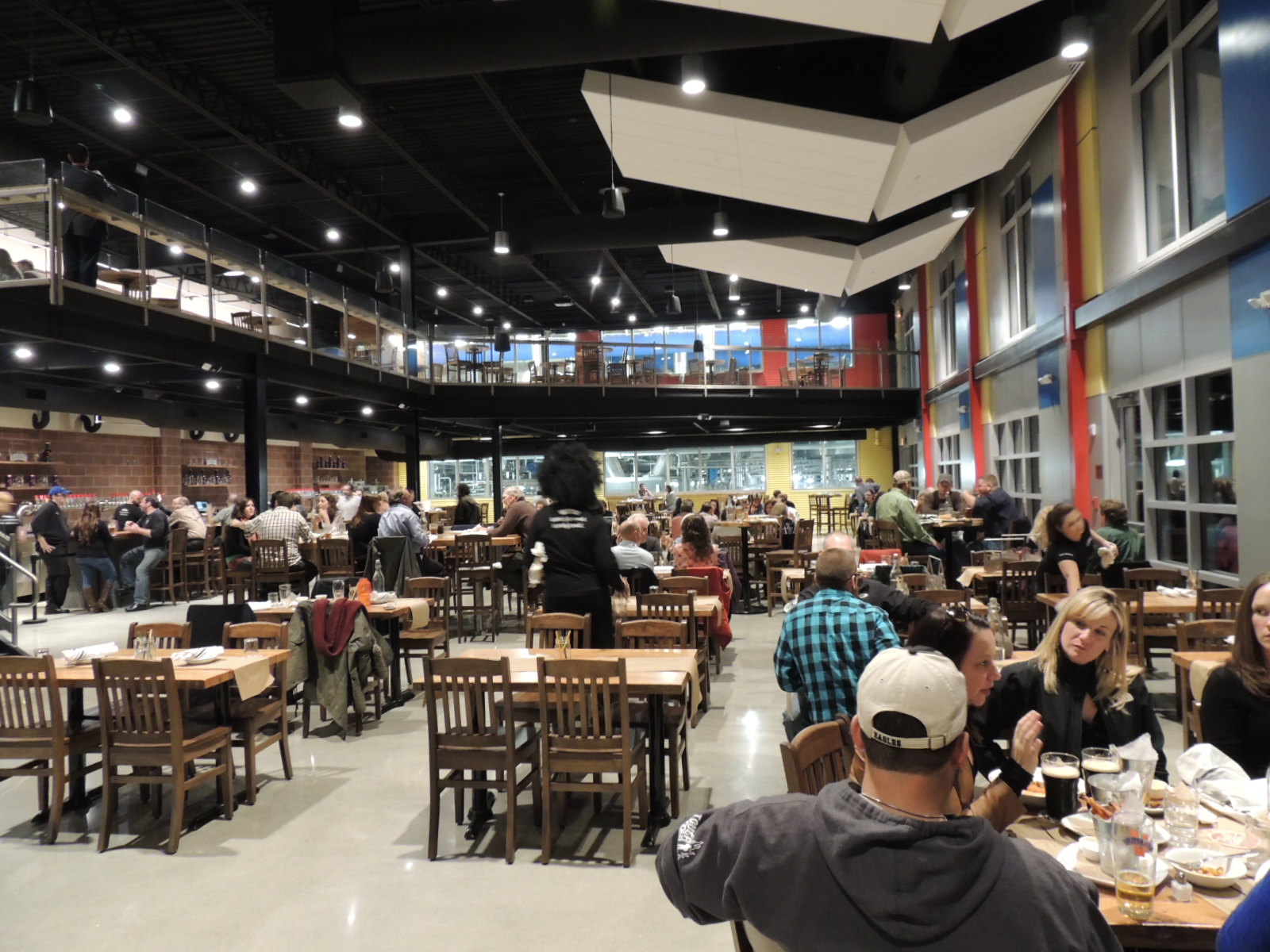
In the last year, Victory opened a pub in Kennett and a restaurant/brewery in Parkesburg more than twice the size of the original in Downingtown. Such expansion is a testament to the local demand for its product. In all, the company employs 410 people.
This past week, Victory also announced its landmark alliance with Southern Tier Brewing, a comparable company based in western New York. Their union, formed under the umbrella of Artisanal Brewing Ventures (ABV), will enable each to maintain their independence while pooling their resources in the ever-evolving market for craft beer.
Industry insiders view Victory and Southern Tier’s recently announced partnership as a watershed in the history of craft beer, as ABV will shepherd both in collaborative sales and marketing efforts to strengthen and expand their distributor and retail partnerships.
“The craft-beer community is at its most critical moment since its inception,” said Covaleski, “as larger brewing corporations have bought into our grassroots movement, irrevocably changing the marketplace. Like-minded brewers such as Victory and Southern Tier can preserve our character, culture, and products by banding together.”
Although HopDevil and Golden Monkey – Victory’s top sellers – may not be household names on par with, say, the Big Mac or Whopper, there’s ample reason to believe that Victory’s future will be more lucrative than its past.