
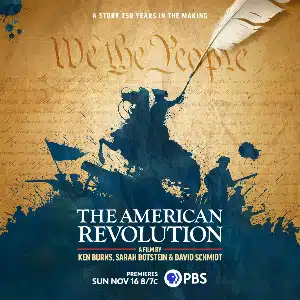
Everyone thinks they know the story of the American Revolution including the midnight rides, the musket smoke, George Washington at Valley Forge.
But filmmaker Ken Burns saw something deeper waiting beneath the marble myths.
In his new documentary series The American Revolution, premiering this month on WHYY, Burns and longtime collaborators Sarah Botstein and David Schmidt pull back the curtain on the people, places, and contradictions that shaped America’s founding.
A Project Years in the Making
The team began researching the film around 2018, just after finishing Country Music. Over seven years, through pandemic shutdowns and reopened archives, they pieced together a fuller picture of how thirteen scrappy colonies became the United States.
They read thousands of letters, diaries, and newspaper accounts, some tucked away in Philadelphia’s own archives and national parks, to ensure every scene was anchored in fact.
Burns often calls the Revolution “a story encrusted with sentimentality and nostalgia.” His mission was to scrape away that varnish.
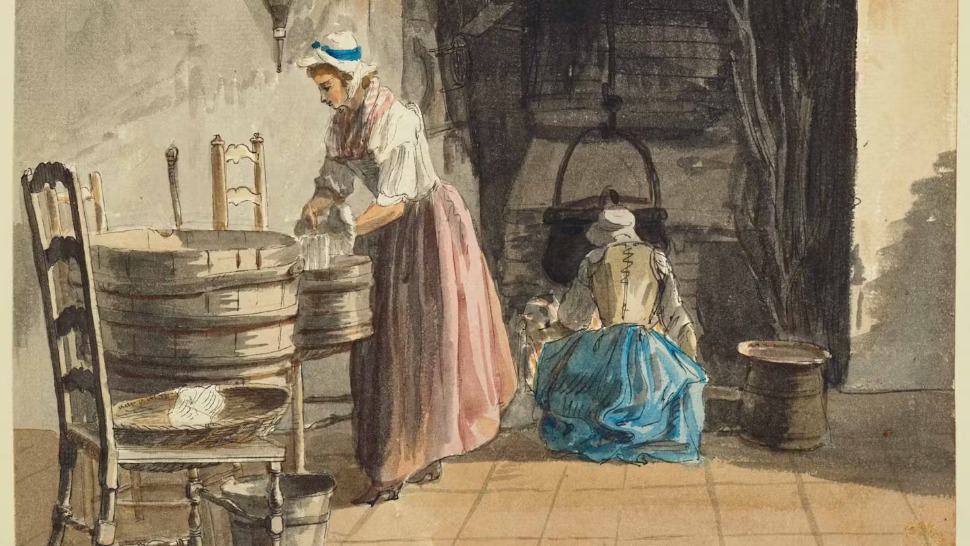
Rather than another retelling of the most important events, he wanted to show how ordinary people, the farmers, mothers, immigrants, and enslaved men and women, shaped the fight for independence.
Getting the Story Straight
Inside Burns’ Florentine Films studio in New Hampshire, walls were plastered with maps of Valley Forge, timelines from the Pennsylvania Gazette, and handwritten quotes verified against multiple sources.
Historians Annette Gordon-Reed, Stacey Schiff, and Joseph Ellis reviewed narration drafts to keep the storytelling rigorous. Every claim had to pass a “two-source” test: a document and a corroborating witness.
That meticulous process revealed a far more complicated American Revolution: part liberation struggle, part civil war, and part world conflict.
Burns told Vanity Fair, “We tend to think of it as bloodless and gallant. It was time to see the Revolution for what it was.”
The film doesn’t shy away from paradoxes: a nation proclaiming liberty while holding slaves; alliances that drew in Native Americans, the French, and the British Empire itself.
Beyond Generals and Statesmen
For every familiar face like Benjamin Franklin or George Washington, the film introduces dozens of people most of us have never met, people who made the battle for independence real.
We meet John Greenwood, the teenage fifer from Massachusetts who marched through Trenton and nearly froze to death. Ten-year-old Betsy Ambler writes about the war’s first thunderclaps from her Virginia home. Sarah Osborn, a soldier’s wife, mended uniforms near the front.
Burns’s editors layered their handwriting over period imagery, “proof that these lesser-known characters lived too,” he said.
That cinematic choice reminds viewers that the Revolution wasn’t just fought by the generals and politicians, but by neighbors whose names time nearly erased.
The Human Dimension
What separates this documentary series from so many classroom versions of American history is its humanity. The Continental Army, Burns notes, was “filled with teenagers, ne’er-do-wells, felons, and recent immigrants.”
They were hungry, scared, and under-equipped, yet somehow endured.
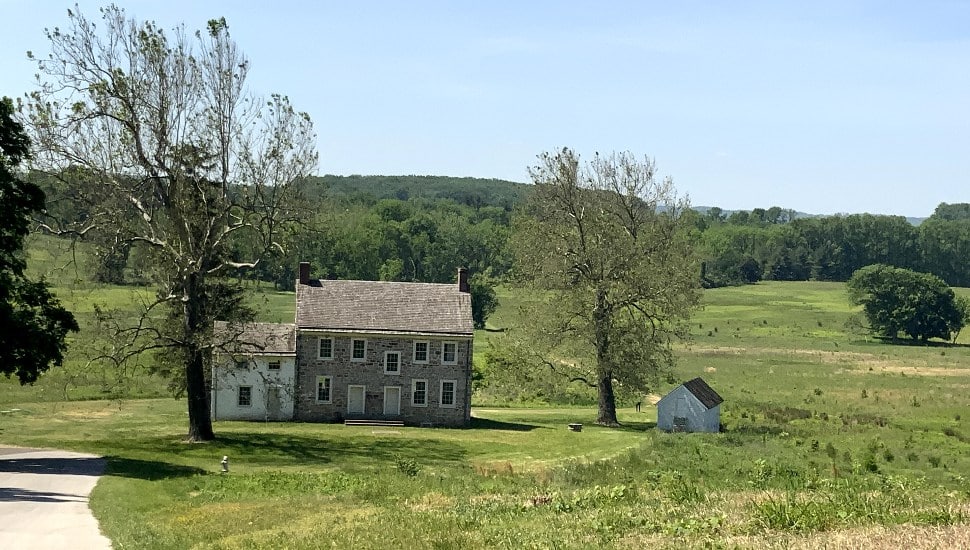
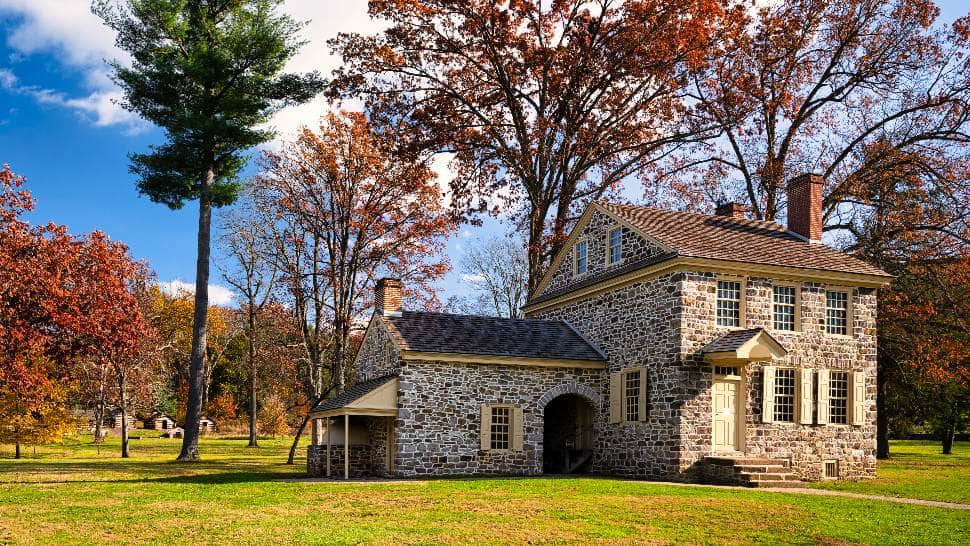
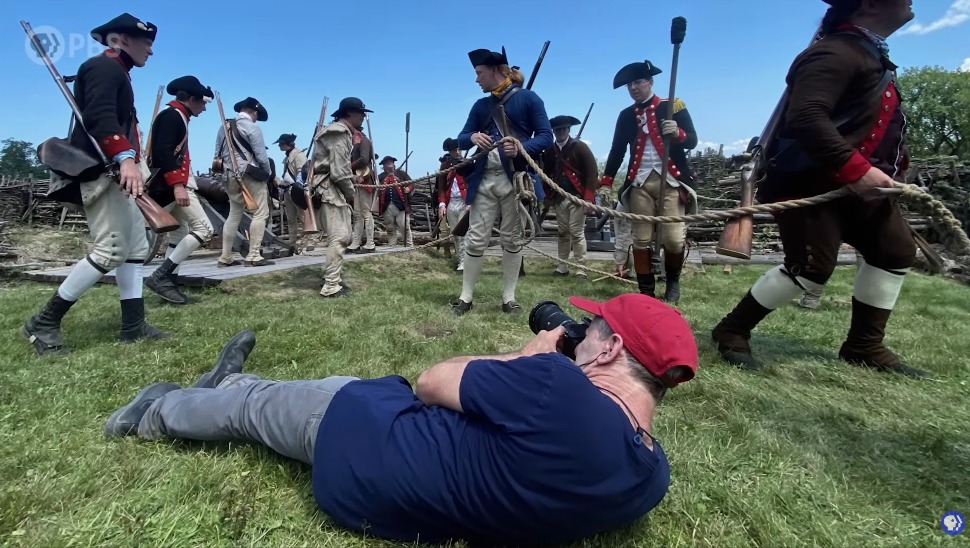
In one sequence filmed at Valley Forge National Historical Park, sunlight cuts through winter fog as narration recalls how Washington’s ragged soldiers drilled, bled, and rebuilt their confidence.
These scenes, filmed across several national parks from Philadelphia to Saratoga, return the Revolution to its landscape; our own towns, rivers, and backyards across the Delaware Valley.
Why It Matters Now
The American Revolution will air over six consecutive nights on WHYY, offering a sweeping but intimate look at how ideals of freedom and self-governance became a nation.
For viewers in and around Philadelphia, it feels especially close: the cobblestones of Old City, the meadows of the Brandywine River valley, the frozen encampments at Valley Forge, all pieces of our collective origin story that happen to be right in our backyard.
Burns and his collaborators haven’t just recreated history; they’ve re-examined it. By blending myth and truth, famous heroes and forgotten laborers, The American Revolution invites us to see how the birth of the United States was both noble and flawed, visionary and human.
And that, perhaps, is Burns’s greatest triumph, reminding us that the Revolution didn’t end in 1783.
It still unfolds every day, in the way we tell our stories, how we fact-check each other, and how we decide who gets to be part of them.