
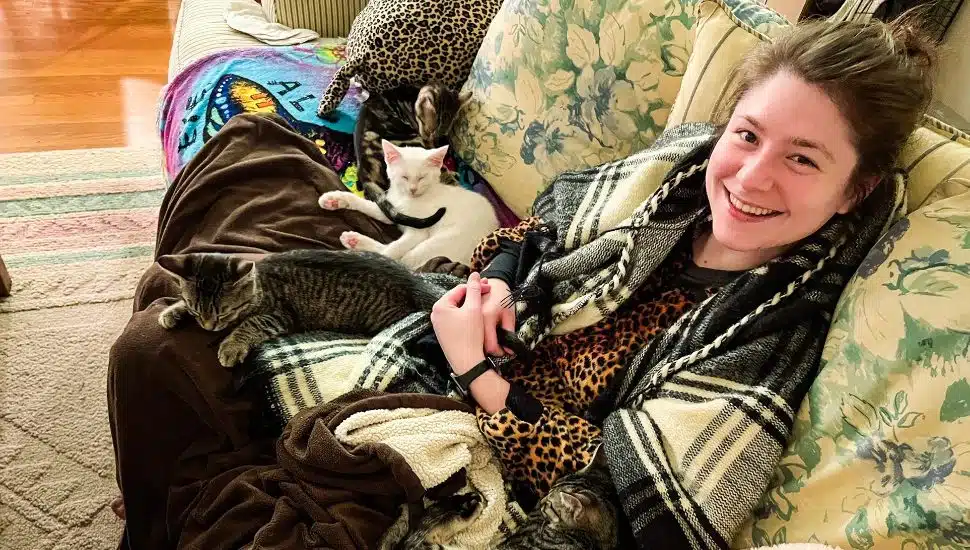
Two Chester County women with chronic illnesses are calling on the fashion industry to be more inclusive of people in similar positions, writes Zoë Read for WHYY.
Sierra RyanWallick loved wearing tight athletic clothes for the confidence they gave her, until endometriosis caused severe bloating and stomach pain. She donated half of her garments, and dysautonomia, a nervous system disorder, made her give up most of her tops.
Today, she wears comfortable loungewear, like oversized T-shirts, hoodies, and sweatpants.
“Having to rethink my entire wardrobe was a shock, and really frustrating to slowly have all my favorite pieces taken away from me and having to make all these adjustments,” said RyanWallick.
Sarah Bailey’s shopping habits also changed due to the lack of available adaptive clothing lines after she was also diagnosed with dysautonomia.
Now she has a few quality clothes rather than a full closet, but she wishes she had more adaptable options.
With over half of the U.S. population affected by at least one chronic illness, advocates are now pushing the fashion industry to create clothing that incorporates access to medical devices, features adaptable waistbands, or uses breathable fabrics.
Read more about how fashion affects wearers and why adaptive clothing can be helpful for people with chronic illnesses in WHYY.
_______