

Editor’s note: This Chester County Leadership profile of Jerry & Leo Parsons was originally published on March 1st, 2015.
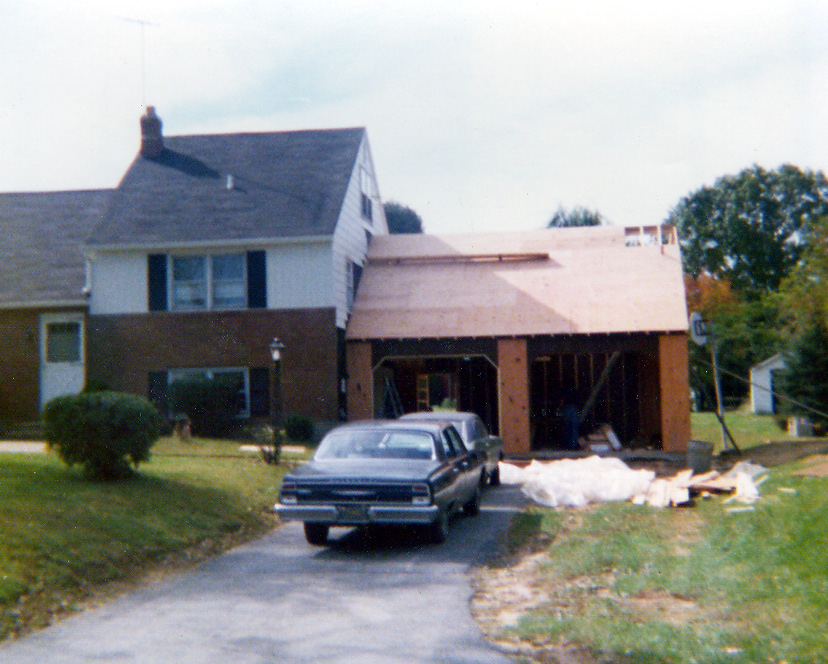
Communications Test Design, Inc, or CTDI as its known more commonly, began on March 17th, 1975 in the Parson family’s garage on Boot Road in West Chester.
Leveraging Donald Parsons’ one-year severance package from Western Electric, $750 in seed money, a whole lot of hard work and a steadfast belief in their workforce, the Parsons family not only built the garage themselves but then built CTDI into the world’s largest independent communications repair and logistics provider with 7,500 employees and 70 facilities around the world.
As CTDI has grown the company hasn’t forgotten its family roots. The East Goshen-based company has maintained a genuine employee focused approach to business and remains a reliable and valued friend to countless community and charitable organizations including the YMCA, Bishop Shanahan High School and the United Way.
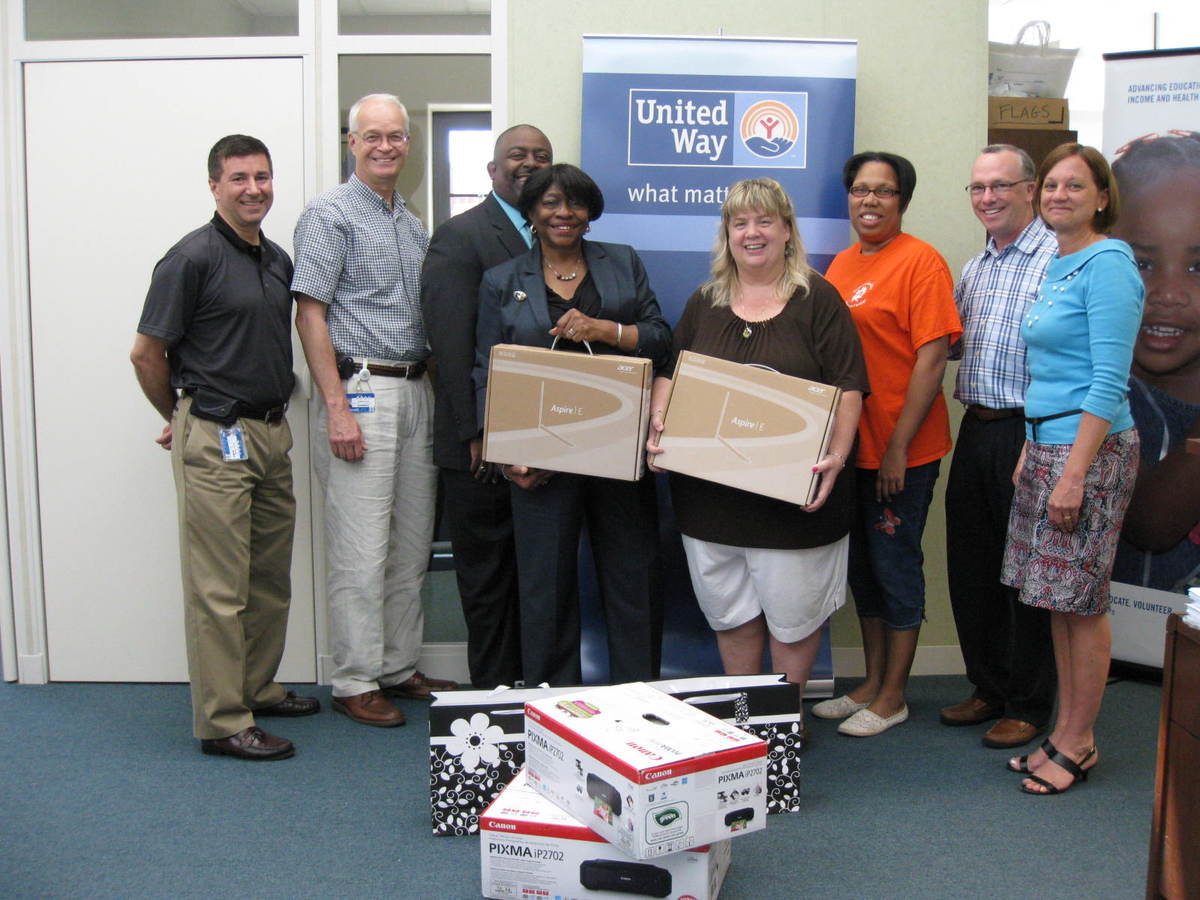
In 2014, CTDI and its employees contributed over $270,000 to Chester County United Way, placing CTDI as one of the top five United Way contributors in Chester County.
As the Parsons and the extended CTDI family get ready to celebrate the company’s 40th anniversary in a couple of weeks, VISTA Today asked Jerry Parsons, CTDI’s Chairman & CEO and brother Leo, the company’s President & COO, about their memories growing up in West Chester and CTDI’s all-American beginnings.
VISTA Today: Lets start at the beginning. Where did you grow up?
Jerry Parsons: at 1100 Boot Road right across the street Mary Jane Lane, very close to what is now 202. Back then, there was no 202. There were a lot of farms, including a pig farm, fields and ponds in the area. When we were kids, we played in those fields and woods and ran around the pig farm.
Leo Parsons: We can remember times when the cows would get out of their pasture and walk over to our yard and literally stand on our patio and look into the window of our house. We would call Ira Hicks, the man who owned the farm next door and ask him to come get his cow.
VT: Where did you go to school when you were growing up?
 JP: We went to Saint Philip & James Catholic School at the corner of Ship Road and Lancaster Avenue in Exton. The parish was just starting, and my father, Don Parsons, went up to Father Martin, the pastor at the time, and asked about schooling options for his children. He didn’t tell Father Martin he had eight children who needed to go to school! All eight Parson kids ended up going to that school.
LP: My parents, Don & Bette, were very active in the parish helping to arrange the Parish picnics and bingo and whatever fundraisers they had.
JP: A good memory from our days there has to do with Sister Regina Plunket, who is now the President of Bishop Shanahan High School. Sister Regina’s father and my dad put up the basketball standards in the school parking lot. Those basketball poles are still standing today.
LP: Mr. Plunket had a welding company right on Route 30 across from what is now the Dunkin Donuts in Exton.
JP: After Saint Philips & James, all eight Parsons kids went through Bishop Shanahan High School, then located in West Chester. Our parents became very active in Shanahan as well.
 LP: In our family, there is a span of 14 years from the oldest to the youngest, so for a long time we always had some Parsons going through Shanahan. Back then, there were a lot of large families then so our eight kids in one family wasn’t all that unusual.
VT: Your first jobs? Where were they and what did you do?
LP: My first job in HS was a janitor at Norcross Greeting Cards in West Chester in the same building that houses QVC Corporate headquarters today. I cleaned a ladies’ room, a men’s room and a little lunch room for four hours each night after school. The job paid $2.85 an hour, which at the time, was fifty cents an hour above minimum wage. After that, I took a job as a shoe salesman at the Exton Mall. While I worked a number of part time jobs and summer jobs at the company, I joined CTDI full-time when I graduated from Penn State with an Electrical Engineering degree in 1982.
VT: What lesson did you take from those jobs Leo?
LP: The lesson I learned is you don’t quit when you’re faced with hardship. I had a tough boss who one night flooded the men’s room on purpose and made me clean it up. When my mom picked me up at the end of the shift, I told her I was quitting. She told me I wasn’t going to quit but rather to go back and show the tough boss what I could do. I took her advice and in the end became really good friends with my boss.

JP: My first job was working second shift at a company in Malvern called Plastimatics, who made clear plastic cups. My job was to inspect and stack the cups as the machine spit them out. I liked electronics and being around electrical stuff so I took a job for $1.70 and hour with George Coffee, an electrical contractor right on West Chester Pike. The first summer I worked for George, I believe it was the summer of ’68, he gave me five, 5-cent raises.
George was close to retiring and was looking for someone to take over his business. He offered me his entire electrical contracting business and for a while had me very pumped up about taking it over. Assuming ownership of the business would have required me dropping out of school, however. My parents were having none of that! My dad told me, ‘Don’t even think about it’ and the subject was never mentioned again.
The lesson I learned, was get your education if you want to be an engineer or an accountant.
LP: Our dad never had a college degree and only got his high school degree by taking the high school equivalency exam. One thing he learned in his job and he in turn taught us, is if you want to advance, get a college education. Both he and our mom were committed that every one of us would go to college. In our house going to college was non-negotiable. While not everyone finished, all eight of us went to college.
JP: Our mother Elizabeth was a West Catholic High School graduate and very smart, so she pushed the academics as well.
VT: How did CTDI get started?
JP: I graduated from Penn State and took a job as an electrical engineer with DuPont in Wilmington. Dad, who was always building something or fixing TV’s, decided to take an early retirement package including a year’s salary from Western Electric where he worked for 28 years. He was always looking for something new to do and came up with the idea to repair the circuit boards for phones from Bell of Pennsylvania. He used his one-year severance package from Western Electric as seed money to carry him. Four of my siblings were still in high school or college, so it was a real risk for him to go out on his own like this.
In 1975, my dad and my brother Richard and I all put in $200, $500 of which went to a lawyer to incorporate. We needed a place to work so we took some of the money and built a garage onto our split-level house on Boot Road. Dad designed it, and we built it. That garage is where CTDI started.
VT: Did you and your father always get along?
JP: My father and I always got along well.
LP: We always got along with our dad, and we get along with all our brothers and sisters as well. A strong family is one of the strengths we have. We are very proud that nine members of the third generation of Parsons are working and fully engaged at CTDI.
JP: We respect each other, and we expect our employees to treat each other with respect.
VT: CTDI is a big contributor to United Way of Chester County. Why?
LP: We got involved in United Way many years ago. The strength we saw in the United Way is that they are engaged in the needs of the local community, which is where our employees live. Through the United Way campaign, we educate our people on what the United Way does and the fact that United Way is investing in the needs of the local communities. Our people have responded and embraced that concept.
The United Way is one aspect of CTDI’s culture of giving back to our community. We have a good sized business here and have a sense of our responsibility to give back to our communities. But even bigger than the United Way, we encourage all of our employees to get engaged in their community.
VT: Finally, what is the best piece of advice you ever received?
 LP: Two things we learned from our parents. First, you can do anything that you put your mind, effort and passion into doing. The second is, you have to work hard and do things the right way.
JP: I have a plaque I received from my dad in my office that reads, “ A little…, added to a little… must become a great amount of…” You can look at CTDI like that. A little repair, added to a little more repair, must become a great amount of repairs, and we are a big repair company today.
LP: CTDI is made up of a tremendous group of people. As we’ve grown, it’s been those people, their hard work and respect for each other, working together, their commitment to quality that have made us successful and helped us help our customers.