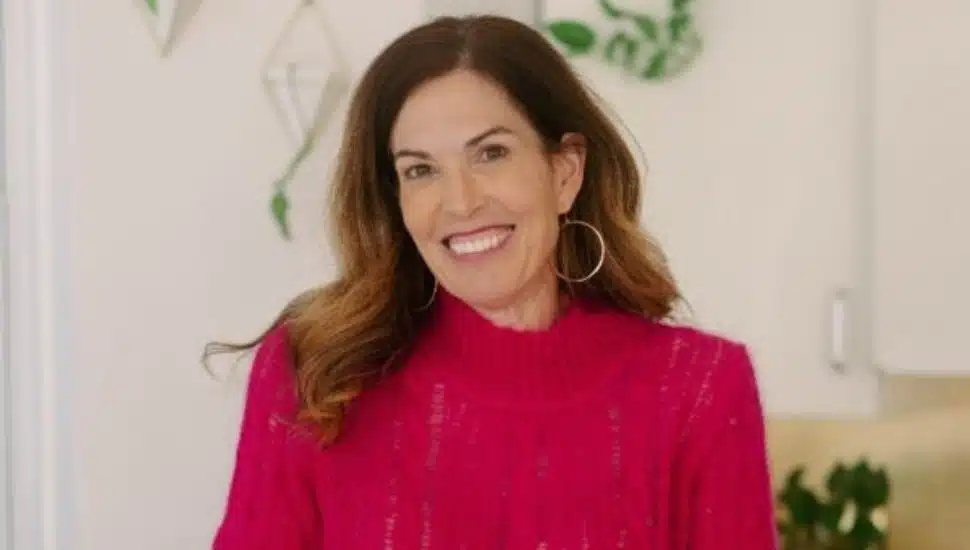



Maryanne Parsons, President and Founder of Partners in Outreach, spoke with VISTA Today about growing up in the small-town community of Ridley Park, where she participated in community events, worked a variety of summer jobs, and learned leadership in student government.
After a background in athletic training and a career in the insurance industry, Parsons founded Partners in Outreach to scale up her charity work. She’s now the proud President of an organization that serves approximately 7,000 kids on a yearly basis while enriching the lives of 800 volunteers.
Today, she’s working to update the program to match her community’s evolving needs, including helping kids regain the literacy skills lost during quarantine.
Where were you born, and where did you grow up?
I was born at Taylor Hospital in Ridley Park, and that’s where I grew up. I’m a Delco girl at heart, although I love Chester County and have made it my home for 38 years.
What did your dad and mom do?
My mom was a stay-at-home mom, and my dad worked at Westinghouse in Essington for over 40 years.
Where were you in the pecking order?
Oldest of two. I had one sister who was just 20 months younger than myself. We were two grades apart, and we were confused for each other a lot. People thought we were twins. We were very close. Still are.
What do you remember about growing up in Ridley?
Ridley Park was one of those small towns where everyone seemed to know each other. There was community spirit everywhere. You had parades for all the holidays, and everyone participated. I have fond memories of twirling a baton, creating floats, and decorating my bicycle for parades. On the Fourth of July, I remember participating in the three-legged race and the wheelbarrow race. That was a big deal.
You would walk to Ridley Park Lake, and everybody was ice skating. It was a place where tradition was truly important. That’s where I first recognized the significance of community.
Where did you go to high school?
I went to Ridley. I was too young to get into the Catholic school, and my mom did not want to hold me back because I had a sister right on my heels.
What kind of jobs did you have as a teenager?
I didn’t work while I was in school. I played sports, and I was involved in many activities.
I worked in the summers. My first job was as a camp counselor. I also worked at Zagara’s farm market. It was a little produce stand at MacDade Boulevard and Swarthmore Avenue. They eventually sold to Genuardi’s. It was a fast-paced job, because that’s where everybody went for their produce. At Christmastime, I helped make hundreds of fruit baskets.
My other job in high school was working as a parking attendant down at the stadiums: JFK, Spectrum, and Vet. My parents were friends and neighbors with the Nilon brothers, so I worked for them. It wasn’t the cleanest job. People were trying to hand me things besides money. If my parents knew what was happening down there, they would have yanked me right out.
What did you learn from those jobs that stays with you?
I learned that you had to show up and be trustworthy. I was handling thousands of dollars at the stadiums. There were people who took advantage, and I found that out later when they were fired.
Working as a camp counselor, they were trusting you with their children. Working at the farm market, Mr. Zagara would stand over your shoulder, watching you work the register and bag the produce. I admired his hard work and respected him.
Customers could drive you crazy, but you learn humility. I was working for somebody. I was aiming to please.
You said you played sports in high school. What did you play?
I played field hockey, gymnastics, and lacrosse, and I was a cheerleader. I was co-captain for hockey, gymnastics, and cheer.
Were you any good?
I had a lot of varsity letters, but I was not a superstar. I was fortunate to be part of some really good teams.
I’m humbled to say that, in a few weeks, I’ll be inducted into the Hall of Fame as an all-around athlete. They call it the Ridley Old Timers. I said, “I’m honored, but I’m having a hard time with the name.”
What kind of music floated your boat in high school?
My first concert was the Eagles at the Spectrum when I was 15 years old. Again, I don’t know that my parents understood what happened at a concert on the floor. I didn’t either. Back then, I was listening to Chicago, Boz Scaggs, Steely Dan, Billy Joel, Elton John, and of course, Bruce Springsteen.
I still love going to concerts today. These days, I’ve also developed a real affection for country. Over the last 20 years, I’ve seen Kenny Chesney, Tim McGraw, Keith Urban, Brett Eldredge, and Eric Church.
Did you have a favorite artist?
Bruce Springsteen. I became a Springsteen fan in 1975, before the rest of the world caught on. I was 15 the first time I saw him.
I’m going to assume you were a pretty good student. Where did you end up going to college?
I chose the University of Delaware because it was close to home, and I was fortunate to receive a partial scholarship from the SICO Foundation. My parents couldn’t afford to just send us. My sister was accepted to Harvard, but they couldn’t pay the balance of the scholarship. So, where we got the money is where we went.
But it turned out to be a perfect fit. I discovered my passion for health and wellness there. I studied to become an athletic trainer long before most schools were hiring athletic trainers, especially women.
It gave me more than just that degree. I learned organizational skills, self-awareness, adaptability, and the courage to embrace new things.
When you look back over your life and career, who are the people who saw promise in you?
I was lifted up my whole life, even in high school. I was the first student to lead the Student Faculty Senate. Before me, it had always been a faculty member.
I was the vice president of my class, so I worked in the office a lot, and the principals were always my mentors. I look at it now and recognize that they saw something in me and gave me opportunities. I didn’t see it in myself too much.
When was the first time you understood that people looked to you for leadership?
In college, Doc Rylander used to lead military calisthenics, and I remember breaking into his class saying, “I want to become an athletic trainer. Would you sign this?”
He was tough and intimidating, and he ended up being a good friend that I stayed in touch with. He would say, “I want you to start the Student Athletic Trainers Club. You’re the president. Go do it.” He gave me graph paper and said, “I want you to design a new training room.” I was 18 years old. He looked at me to be a leader.
What do you think he saw in you?
I don’t know. I had such respect for him. I wanted to do well, and I think he admired hard work. I was a good student. I had As, and I was one of the only female students that was excelling at that time. I was a little ahead of my time, and that played to a woman’s advantage back in the ‘80s.
Where did your work ethic come from?
My parents. There was no excuse. If someone told you to do 10 homework assignments, you were going to do 15. If I had to sell Girl Scout cookies, I was going to sell the most.
I always had to give 110 percent. I’m not sure if that’s good, bad, or indifferent, but in Ridley Park, you grew up in a competitive atmosphere.
Who else saw promise in you?
I’d just graduated, and I was working at a fitness club, waiting for my test results to come back from the Athletic Trainers Board of Certification. I was helping out an insurance agent, and she told me, “There’s a posting in here for a claim representative.” I didn’t know anything about insurance, but I went for the interview, and Tom Salinsky hired me. It was fun to get out of a sweat suit as an athletic trainer.
Within 18 months, I was on a management rotation program. I was always learning and being challenged. I was in operations management. I was in the controller department. I was doing training and development. I was traveling, meeting great people, enjoying the money, and the fast pace.
What was the company?
Allstate, at their regional office on Old Eagle School Road. Ultimately, it led me to meet my husband, Leo, because I was working with his best friend. Talk about an alignment of the stars. You never know which way life’s going to take you.
I had a wonderful career there, but I eventually had to make the decision not to be relocatable, with Leo’s position here in Chester County. I worked from home for a little bit after having my firstborn, and then I decided to retire.
Tell me about Partners in Outreach. How did that get started?
I was at the dance studio with my daughter, and the manager in the office said, “Hey, can you help me? I’m trying to collect gently used clothing for the St. Agnes Day Room.”
So, we did that for a couple of years, and then people were starting to hand me money, and I wasn’t comfortable without some type of formal structure.
I went to see my friend and family Attorney, Joe Nescio, who helped me set up the Articles of Incorporation and establish the 501(c)(3). We founded Partners in Outreach in 2010, and then we began giving out new clothes. It evolved, and things get put in front of you. Challenges become opportunities.
Give me an elevator pitch of how you want Partners in Outreach to be known.
We serve the community with a focus on literacy, but we also provide service opportunities to engage and connect the community. That’s a big part of what we do. We serve over 7,000 kids a year, but we also have 800 volunteers who show up and make it happen.
I remember reading to a second-grade class and then giving out these beautiful hardback books, and one kid turns to the back and says, “Wow, this book cost 20 bucks.”
I tell the volunteers, “If you don’t leave this classroom with a smile on your face, you missed the boat.”
It’s a win-win-win. The classroom is receiving a gift. Each kid is receiving a gift. And, obviously, the volunteer is receiving a gift. It’s very rewarding.
What are you working on this year? What are your priorities?
One of our biggest challenges is to stay aligned with the changing needs of our community, while keeping our constituents and volunteers engaged in meaningful ways.
Most recently, we were especially focused on our annual fundraiser, Laughs for Literacy, which brings people together for a fun evening while raising critical support. That took place on Friday, Oct. 3, at People’s Light.
Another opportunity we have is sustainability. Our board has been working diligently to position us for our long-term success.
Along with that comes the challenge of succession leadership and volunteers. We have to continually seek out and inspire the next generation of people who want to give of themselves.
A lot of our volunteers were stay-at-home moms at one point, so it’s more challenging today because the pool is more limited. But it’s a very fulfilling place to be.
COVID has changed a lot of our focus. Our summer camp programs have changed drastically. A lot of the kids don’t have time to swim. They have to focus on their schoolwork.
So, we’re extending our classroom reading program to those children. We’re still offering camp packs to those in the subsidized camps through the YMCA and other organizations, but a lot of the schools are focused on maintaining their reading level.
Social media and iPhones have also changed everything, and kids don’t know any different because that’s all they’ve known.
What do you do with all that free time that you have?
My greatest joy is spending time with my family. My husband, Leo, and I have been married for 38 wonderful years, and together we’ve raised four amazing children. We love spending time outdoors — biking, hiking, and playing golf whenever we can. I’m passionate about fitness and also enjoy the excitement and artistry of competitive ballroom dancing.
We’re blessed with seven grandchildren and one more on the way, and nothing makes me happier than spending time with them. They fill our lives with laughter and keep me grounded every day.
Three last questions for you, Maryanne. What’s something big that you’ve changed your mind about over the last 20 years?
The biggest thing I’ve changed my mind about is my mind. I was more close-minded, thinking I knew my philosophy of life, but I’ve learned. I attribute a lot of it to my kids, because they grew up in a time when they are more open-minded.
I grew up remembering what segregation was. Families were broken up because they couldn’t accept differences.
I’m opening my mind. We don’t know all the answers, and we’re not here to judge.
What keeps you hopeful and optimistic, Maryanne? It’s a crazy world out there.
We’re very grounded in our faith. A lot of sad stuff happens, and you have to have faith in something. With that faith comes hope and promise. We’re practicing Catholics.
But it’s also faith in humanity, surrounding yourself with good people. The people around you raise you up, and in turn, you need to be raising them up.
Surrounding ourselves with faith-filled people grounds us and makes us look at life in different ways. I’ve tried to make time for my Bible study, and sometimes we’re reading books like C.S. Lewis.
I love this one quote from my friend’s mother. “I’d rather live my life believing, and then, if someday I’m wrong, so be it. But I’d rather that than live my life not believing and find out I was wrong.”
Those are the choices we make, and that’s what keeps us optimistic and hopeful. I don’t know what path I’m on, even with Partners in Outreach, but the right people are put in front of me, and there’s a reason I’m called to do it.
Finally, Maryanne, what’s the best advice you’ve ever received?
I’ve been fortunate to have so many mentors whose advice really shaped me.
When I got put in my first management role at Allstate, I said, “I don’t know if I’m ready for this.” And Tom Salinsky said, “Don’t worry. Just surround yourself with good people, and you’ll be successful.” That has stayed with me my whole life. I see that every day at Partners in Outreach.
And Doc Rylander, at the University of Delaware, when we’d have unusual situations with injuries, we’d ask him, “Doc, what do you think?” And he’d say, “Figure it out.” It sounded blunt at the time, but it was a gift, because it builds your confidence in your ability to solve problems. That has served me well.
And my first mentor was my mother. She always said, “You can do anything if you put your mind to it.”
____________
Publisher’s Note: Hellen Harris assisted with this profile.