
History has demonstrated that civilizations can fail if farmland is not maintained. We have our own examples of significant areas being devastated by lack of attention to the soil such as the exhaustion of tobacco land in South Carolina and other tobacco states in the late 18th and early 19th centuries and the horrendous Dust Bowl in the 1930s that “turned the Great Plains in to a desert.”
We have learned a lot since then and since 1947 Chester County Soil Conservation District has had the responsibility of preserving the purity of our water supply and making sure our precious farmland remains productive in our county.
 Dan Miloser, Agricultural Team Leader, understands that farmers must make a living and soil conservation is one of the many factors they must manage and conservation might not always be a priority. He would like “conservation to become integral to their business and to their priorities.
It is a long term investment since the soil is the basis of their business and is no use if it gets washed in to the Delaware River Estuary or the Chesapeake Bay.”
There are 1,700 farms across the county – 700 in the Chesapeake Bay Watershed.
This large number provides a challenge to his highly qualified six staff members who have the job of developing relationships with individual farmers. The initial contact relies on the farmer to make the call. Less than 1% of the visits result from complaints.
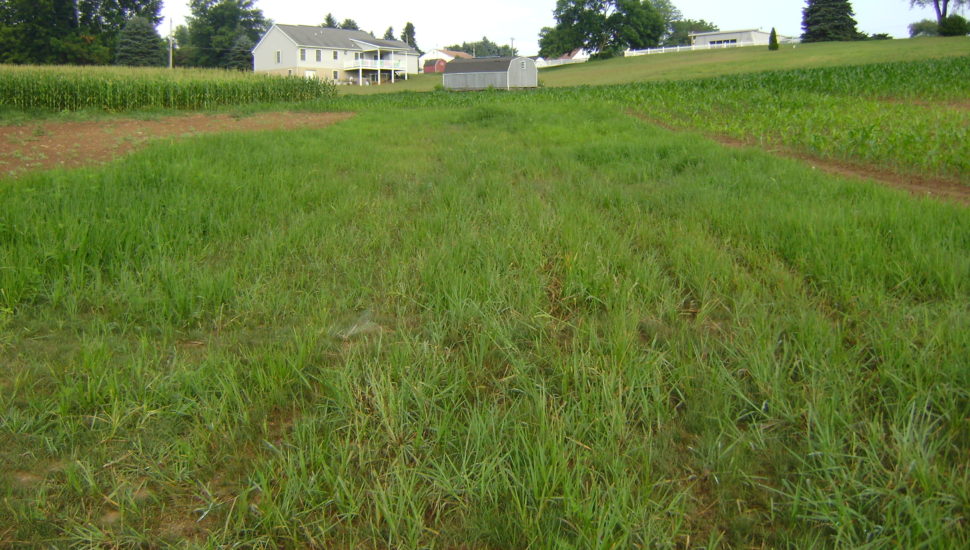
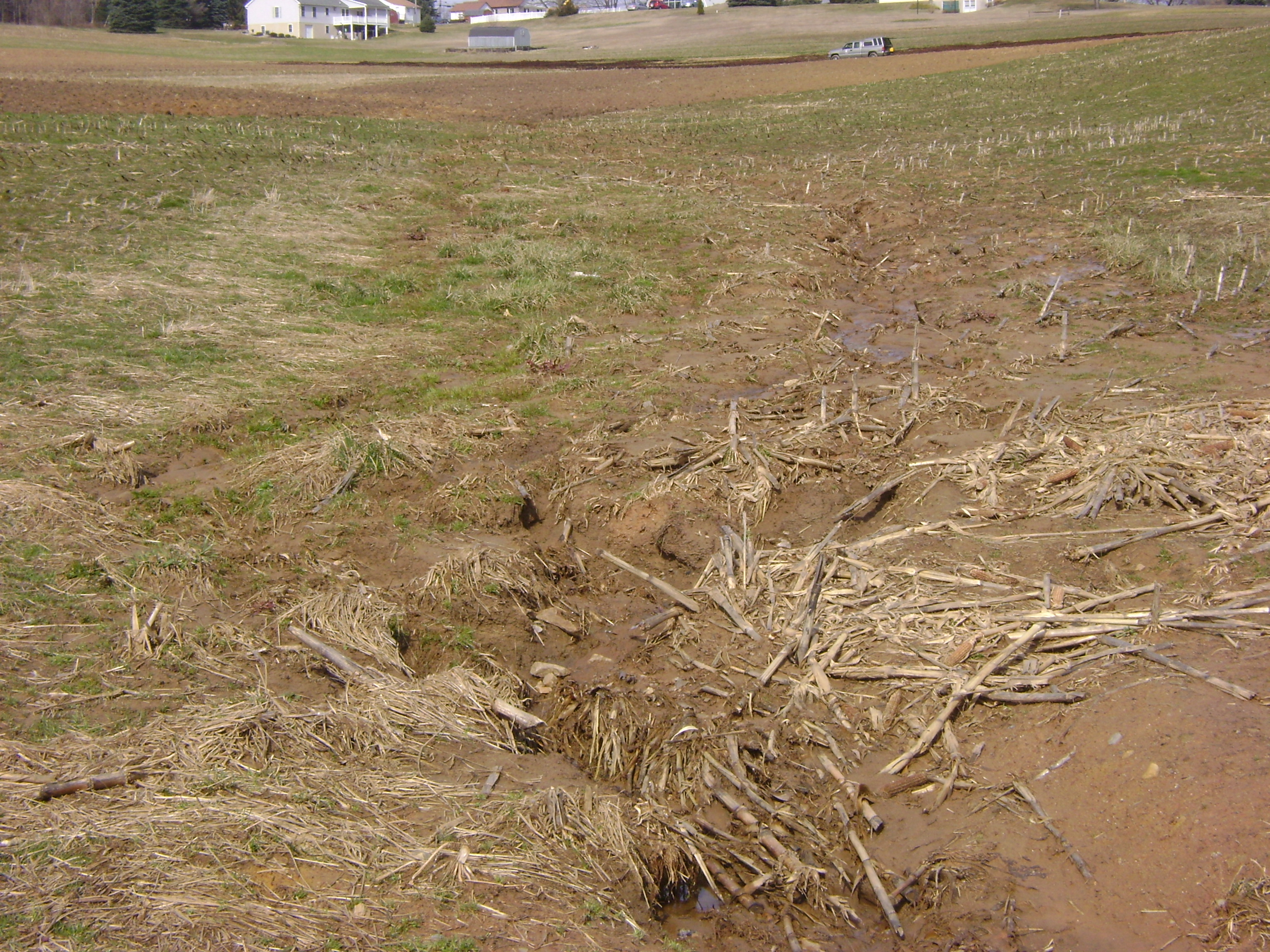
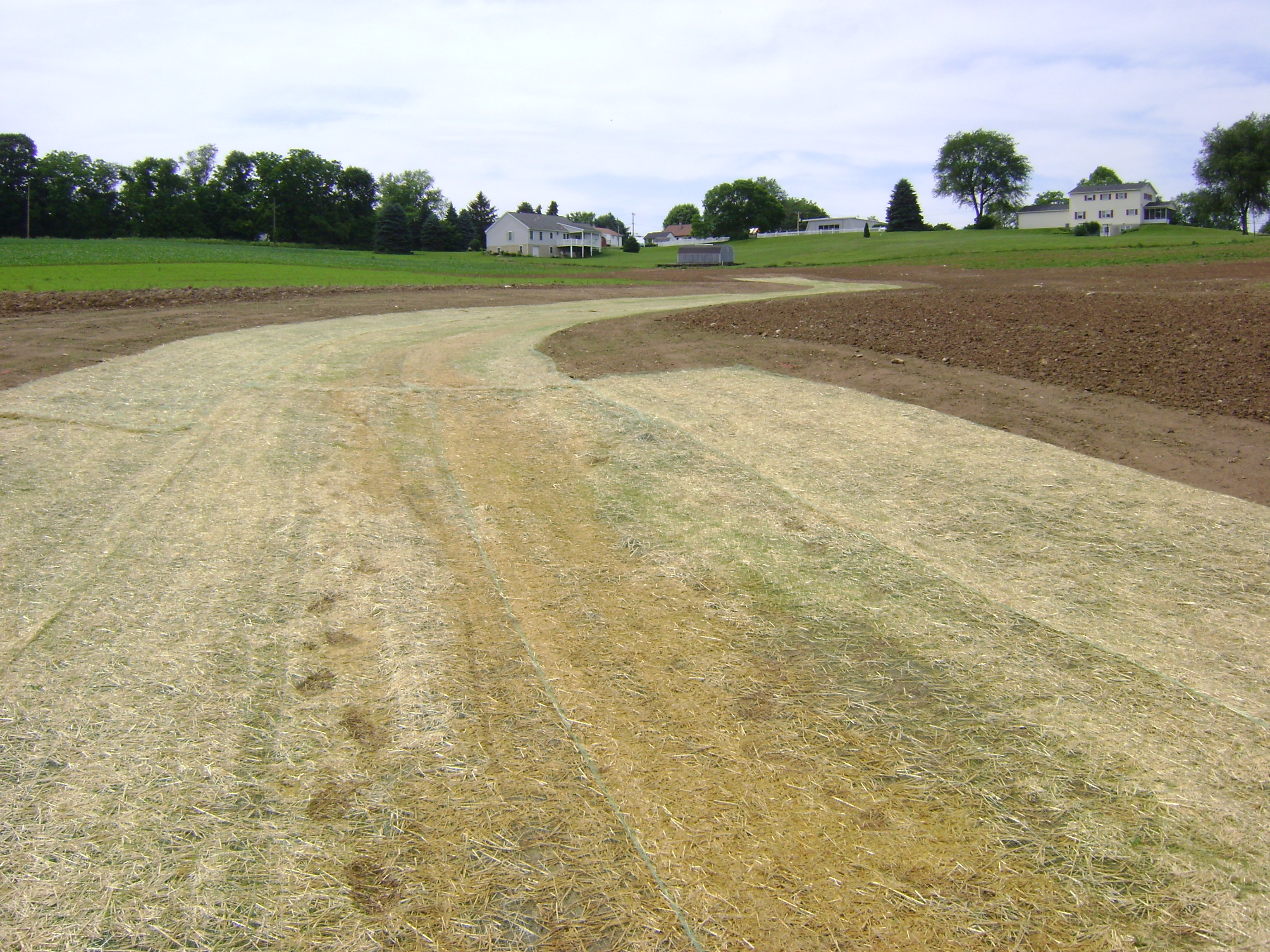
The farmer might be troubled by a gulley in a field or a manure storage area with inadequate containment. Detailed plans are then prepared for a grassed waterway or a cement base for the manure pile.
The work is executed, a relationship develops so that further projects may be planned such as contour strips or the planting of cover crops in the fall so that the soil is covered during the winter to reduce surface erosion and nutrient leaching.
All the work carried out is based on best management practices that have been determined by the farmer with guidance from a conservation plan writer, which may be a government employee or a private consultant. Use of any such BMPs can then be funded.
 The objective of all this work is to prevent soil erosion and the leaching of nutrients in to the streams. Nutrients such as nitrogen and phosphorus cause both pollution and are a loss to the soil, so are no longer available for the next crops.
(The city of Wilmington gains 80% of their water supply from the Brandywine Creek so has a strong interest to ensure the river is as pure as possible. Funding of soil conservation programs results in less polluted water and so reduced water treatment.)
Projects that are carried out by the Soil Conservation District are often funded by state and USDA cost incentive programs, with additional projects funded by other public and private grant sources as well as from the farmers themselves.
Conservation practices are long term investments and are not easy to value in dollar terms so farmers who are often operating on very narrow margins are unable to fund the significant costs. Luckily the grants typically cover 70-75% of the cost of the projects.
While adequate funding is available the District is restricted in their work since their small work force can only handle so many projects at the same time. Yet these projects are ensuring that the soil on our precious farmland is preserved and the leaching of nutrients is minimized so that our water supply is as pure as possible.
We are lucky to have such a dedicated and professional team in our county and it is no surprise that our Chester County Soil Conservation District is highly regarded across the state.
_________
 Duncan Allison gained degrees in horticulture and extension education in the UK and US and spent most of his career working for the DuPont Company developing and marketing crop protection chemicals. Recently he has written reports for a global ag publisher and for New Jersey-based international business consultants Kline & Co. For the last 16 years he has been heavily involved in the local farming of Chester County where he has lived with his wife and family since 1980. Contact Duncan directly via email at [email protected].