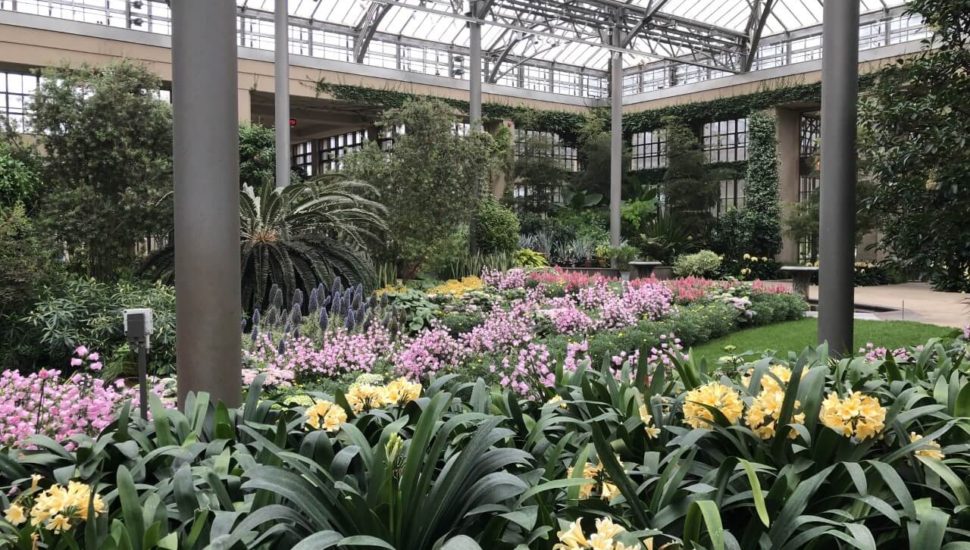


The remarkable environmental science background behind Longwood Gardens is what makes the local treasure one of the most beloved botanical gardens in the country, reports Elias Nash for Sciencing.
The largest botanical garden in the United States, Longwood Gardens has a reputation for its expansive floral displays, fountain shows, meadows, and woodlands. But the near century of conservation and intentional land stewardship behind the sightseeing is what makes the collection truly one-of-a-kind.
Longwood Gardens began with a small land purchase by Pierre S. du Pont in 1906. The du Pont family had began planting trees in 1798, and Pierre purchased the land to continue protecting natural land.
Now, the gardens span over 1,000 acres with 10,000 domestic and international plant species. A team of fifty dedicated experts make up the environmental science team behind the stunning displays.
The team continues the legacy of conservation and responsible stewardship.
Researchers work in specific fields ranging from soil health to species propagation to endangered plant species. Many team members have earned PhD degrees in specific conservation areas. In day-to-day work, the team combines knowledge of native horticulture and local ecology to make Longwood Gardens a sustainable local attraction.
The work of the science team goes beyond species selection or integration. The team also implements recycling, composting, and responsible waste management practices throughout the gardens to reduce the gardens’ carbon footprint.
The Longwood team of experts also spreads the joy and importance of land protection through environmental education, including youth programs, college internships, and continuing education programs.
Read more about Longwood Gardens and the intriguing science behind the beloved attraction in Sciencing.
_____